If you’ve ever felt a sharp, burning, or electric pain shoot from your lower back down through your glute and leg, you already know sciatica isn’t something you can just “walk off.” It can make sitting through a workday, sleeping through the night, or even standing up from a chair genuinely painful.
The good news: sciatica is one of the most treatable conditions we see at Nucleus Physical Therapy, and most people don’t need injections or surgery to get lasting relief. Here’s what actually works.
What Is Sciatica, Really?
Sciatica isn’t a diagnosis on its own — it’s a symptom. It refers to pain that travels along the path of the sciatic nerve, which runs from your lower back, through your hip and glute, and down the back of your leg. The pain happens when something is irritating or compressing that nerve, or a nerve root near your spine.
Common causes include:
- Disc herniation or bulge pressing on a nerve root
- Spinal stenosis — narrowing of the space around the spinal nerves
- Piriformis syndrome — a tight or spasming muscle deep in the glute compressing the nerve
- Degenerative disc disease changing the mechanics of your lower spine
- Poor movement patterns that repeatedly load the same segment of the spine
This is exactly why “sciatica treatment” isn’t one-size-fits-all — the right treatment depends entirely on what’s actually causing the nerve irritation in the first place.
Why Rest Alone Usually Doesn’t Fix It
A lot of people try to wait sciatica out — a few days of rest, maybe some ibuprofen, hoping it resolves on its own. Sometimes it does. Often, it doesn’t, because rest doesn’t address the mechanical issue causing the compression in the first place. Prolonged inactivity can also lead to stiffness and deconditioning that makes the problem worse once you do try to move again.
What Actually Works: A Root-Cause Approach
The most effective sciatica treatment starts with correctly identifying why the nerve is irritated — not just treating the symptom of leg pain. At Nucleus, your evaluation includes a thorough assessment of your spine mechanics, hip mobility, and movement patterns to pinpoint the actual source.
From there, treatment for sciatica typically combines several approaches:
Manual therapy. Hands-on techniques to reduce pressure on the nerve, improve joint mobility in the spine and hips, and release the muscles that may be compressing the nerve (like the piriformis).
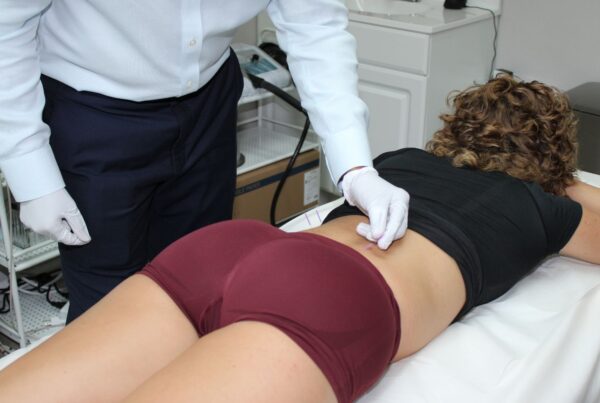
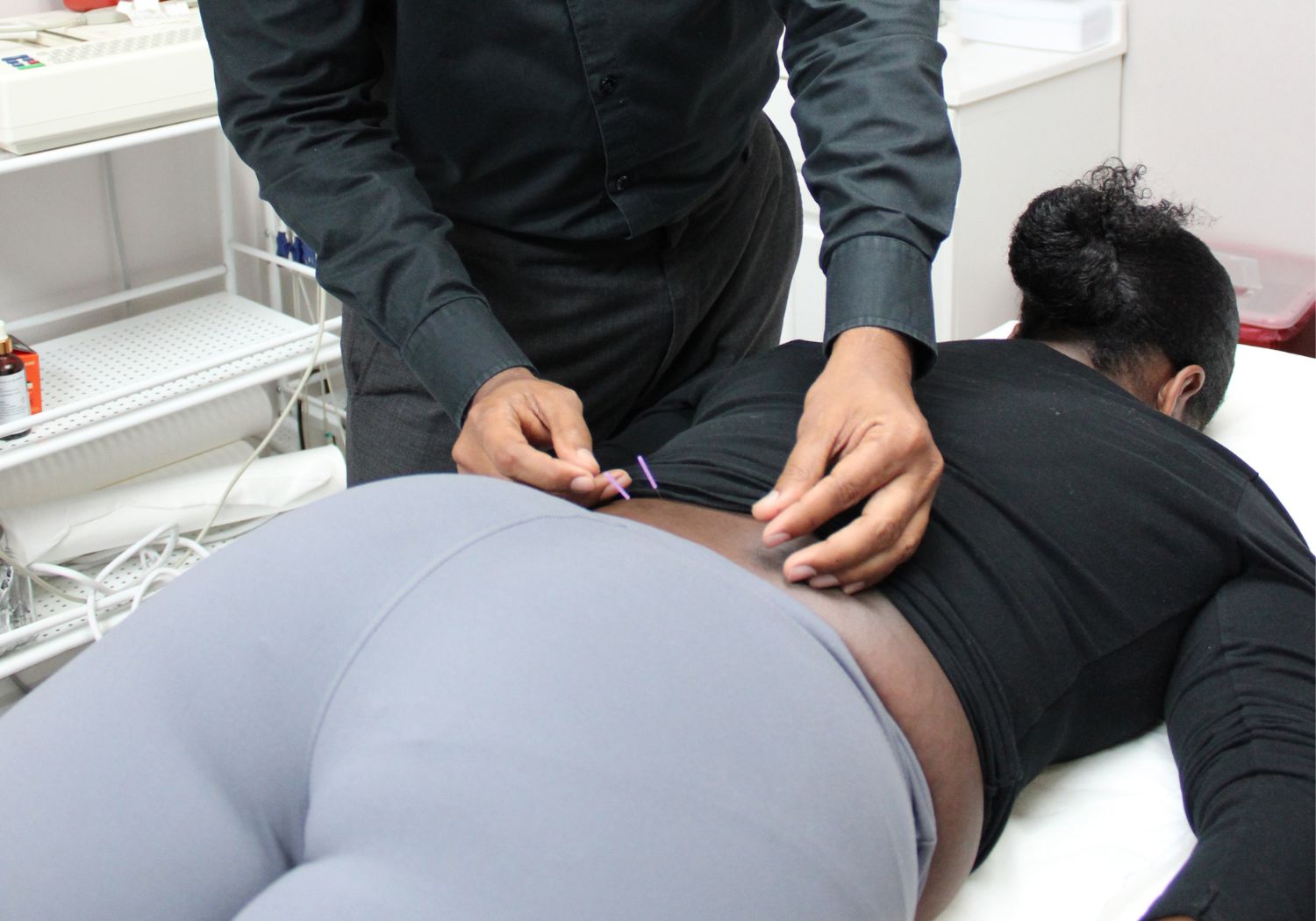
Dry needling. A thin needle is used to release tight, overactive muscles that are often contributing to nerve compression — particularly effective for piriformis-related sciatica and deep gluteal tightness that’s hard to reach with stretching alone.
Spinal manipulation. For sciatica driven by joint restrictions in the lower spine, targeted manipulation can help restore normal movement and take pressure off the irritated nerve root.
Specific exercise prescription. Not generic stretches — a progression built around what your evaluation actually found. This might include nerve gliding exercises, core stabilization, or hip mobility work, depending on the root cause.
Movement and posture correction. Especially important for people who sit for long periods at work, since prolonged sitting is one of the most common aggravators of sciatic nerve irritation.
How Long Does Sciatica Take to Improve?
This varies based on the underlying cause and how long you’ve had symptoms, but many patients notice meaningful improvement within the first two to three weeks of focused, one-on-one treatment. Chronic cases that have been building for months can take longer, which is exactly why getting an accurate diagnosis early matters — the longer nerve irritation continues, the more it can affect surrounding muscles and movement patterns.
When Sciatica Needs More Than Physical Therapy
Most sciatica cases respond well to conservative treatment. But part of a thorough evaluation is knowing when something is outside that scope — for example, progressive weakness, loss of bladder or bowel control, or numbness that’s rapidly worsening are signs that warrant an immediate referral to a physician. A qualified physical therapist should always be checking for these red flags at your first visit.
Why Tampa Residents Choose a Direct, One-on-One Approach
Sciatica is exactly the kind of condition where a rushed 15-minute visit with a rotating cast of aides makes it hard to get consistent, accurate treatment. At Nucleus Physical Therapy, every visit is a full 60 minutes with the same doctor of physical therapy — Dr. Mohsin Ansari, who has 16 years of experience and advanced training in spine care, manual therapy, and dry needling. That consistency matters, especially for a condition where small mechanical details make a big difference in outcomes.
And because Florida allows direct access to physical therapy, you don’t need a referral to get started — you can be evaluated and begin treatment right away instead of waiting weeks to see a specialist first.
Dealing with sciatica and ready for an actual plan instead of more guessing? Book a free discovery call with Nucleus Physical Therapy in Tampa, or call (813) 570-1785.