Tampa traffic doesn’t make it easy — between I-275, the Veterans Expressway, and Waters Ave, fender benders and worse happen every day. If you’ve recently been in a car accident and you’re starting to feel stiffness, neck pain, or back pain that wasn’t there right after the crash, you’re not imagining it, and you’re not alone.
Here’s what’s actually happening in your body, and what to do about it.
Why Pain Often Shows Up Days Later
One of the most common things we hear from patients after an accident is, “I felt fine at the scene, but two days later I could barely turn my neck.” This is incredibly common, and there’s a physiological reason for it.
In the moments after a crash, your body releases adrenaline and cortisol — stress hormones that mask pain and inflammation. It can take 24 to 72 hours (sometimes longer) for the true extent of soft tissue damage to become apparent, as inflammation builds and muscles that were strained during the impact start to guard and spasm.
This delayed onset is exactly why it’s a mistake to assume you’re fine just because you didn’t feel pain immediately after the accident.
Common Injuries We See After Car Accidents
Whiplash. The rapid back-and-forth motion of the neck during a collision — even a relatively low-speed one — can strain the muscles, ligaments, and joints of the cervical spine. Symptoms include neck stiffness, headaches, and pain that can radiate into the shoulders.
Lower back pain. The force of a collision, combined with the seatbelt holding your hips in place while your upper body moves, puts significant stress on the lumbar spine and can aggravate discs or joints.
Headaches. Often connected to whiplash, headaches after an accident frequently originate from tension and joint restriction in the upper neck — a connection that’s easy to miss if the neck itself isn’t examined.
Shoulder pain. Seatbelt bracing and the jolt of impact can strain the shoulder and upper back, especially on the side the seatbelt crosses.
Sciatica or nerve-type pain. If a disc is affected by the impact, you may feel pain radiating down through the hip and leg, sometimes with numbness or tingling.
Why Getting Evaluated Early Matters
Waiting to “see if it gets better on its own” is one of the most common mistakes after a car accident. Untreated soft tissue injuries have a tendency to become chronic — the body compensates around the pain, movement patterns change, and what could have been a few weeks of focused treatment turns into months of lingering stiffness and discomfort.
Getting a proper evaluation early accomplishes two things: it gives you an accurate picture of what’s actually injured, and it starts the recovery process before compensation patterns have a chance to set in.
Do You Need a Referral to See a Physical Therapist After an Accident?
No. Florida is a direct access state, meaning you can see a physical therapist without a referral from a doctor first. If you’ve been in an accident, you can call and get evaluated directly — you don’t have to wait weeks to get in with your primary care physician or an orthopedist first.
What a Thorough Post-Accident Evaluation Looks Like
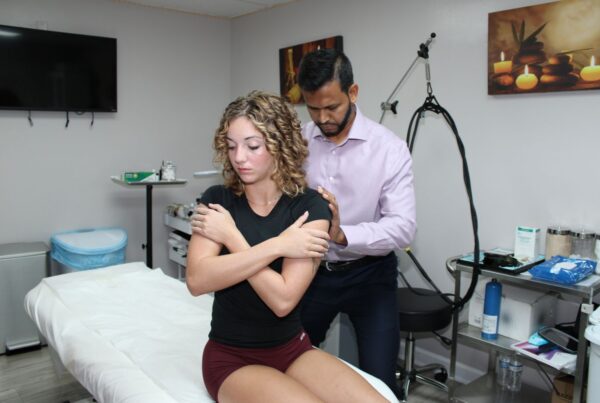
At Nucleus Physical Therapy, your first visit is a full 60-minute, one-on-one evaluation with Dr. Mohsin Ansari, a doctor of physical therapy with 16 years of experience. We assess:
- Range of motion and mechanical restrictions in the neck, back, and shoulders
- Signs of nerve involvement (numbness, tingling, radiating pain)
- Muscle guarding and compensation patterns that may have developed since the accident
- Any red flags that would warrant imaging or a physician referral before proceeding
From there, we build a specific plan — not a generic “whiplash protocol” — based on exactly what your evaluation shows.
How Physical Therapy Treats Car Accident Injuries
Treatment typically combines several approaches depending on what’s found during your evaluation:
- Manual therapy to restore normal joint mobility and reduce muscle guarding in the neck, back, and shoulders
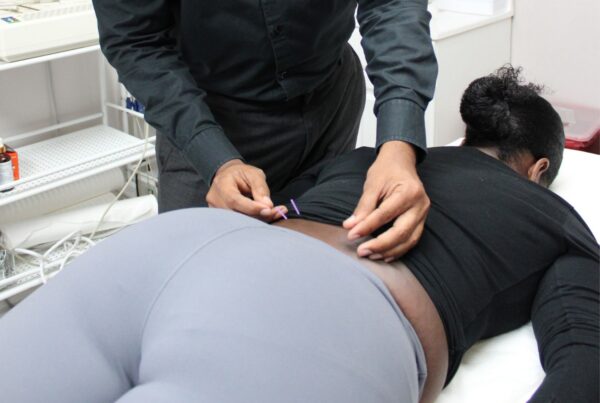
- Dry needling to release deep muscle tension and trigger points that develop after trauma
- Spinal manipulation where appropriate, to address joint restrictions contributing to pain
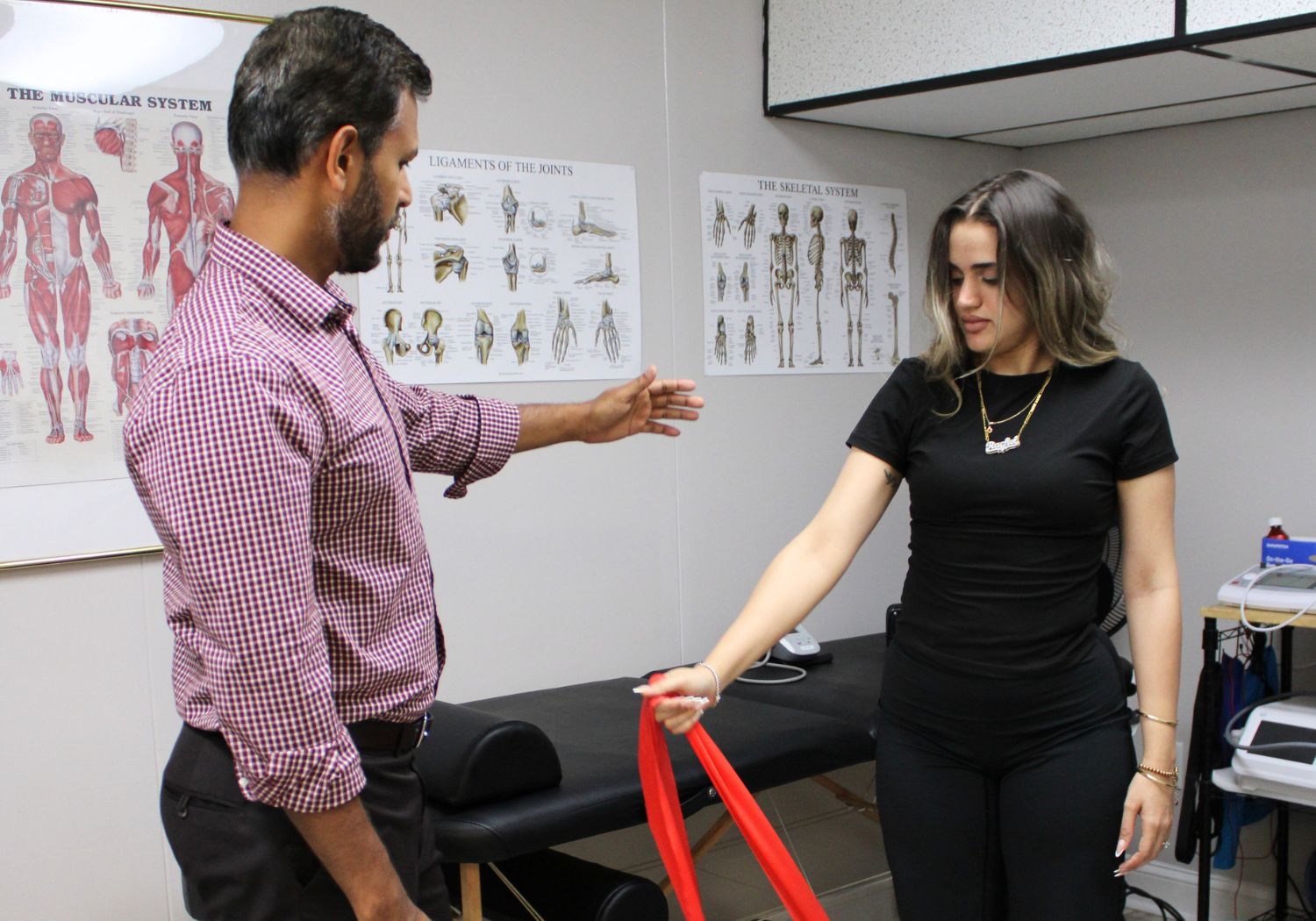
- Progressive exercise to rebuild strength and stability once acute pain has settled
- Posture and movement retraining to prevent compensation patterns from becoming permanent habits
What to Do Right After a Car Accident in Tampa
- Get checked out by emergency services or urgent care first if there’s any concern about serious injury.
- Don’t assume you’re fine just because you feel okay immediately after — give it a day or two and pay attention to how you feel.
- If stiffness, pain, or headaches develop, get evaluated by a physical therapist promptly rather than waiting to see if it resolves.
- Keep any documentation from the accident and initial medical visit, as this can be useful for your records regardless of how you’re pursuing care.
Why Consistency Matters for Accident Recovery
Recovering well from an accident isn’t just about a few stretches — it’s about someone tracking your progress closely and adjusting the plan as your body responds. That’s a lot harder to do when you’re seeing a different provider or assistant every visit. At Nucleus, you work with the same doctor of physical therapy for every session, which means nothing gets lost between appointments and your plan actually evolves with you.
Feeling stiff or sore after a recent accident? Don’t wait for it to become a bigger problem. Book a free discovery call with Nucleus Physical Therapy in Tampa, or call (813) 570-1785 to get evaluated — no referral needed.